Book Reflection: 马云内部讲话
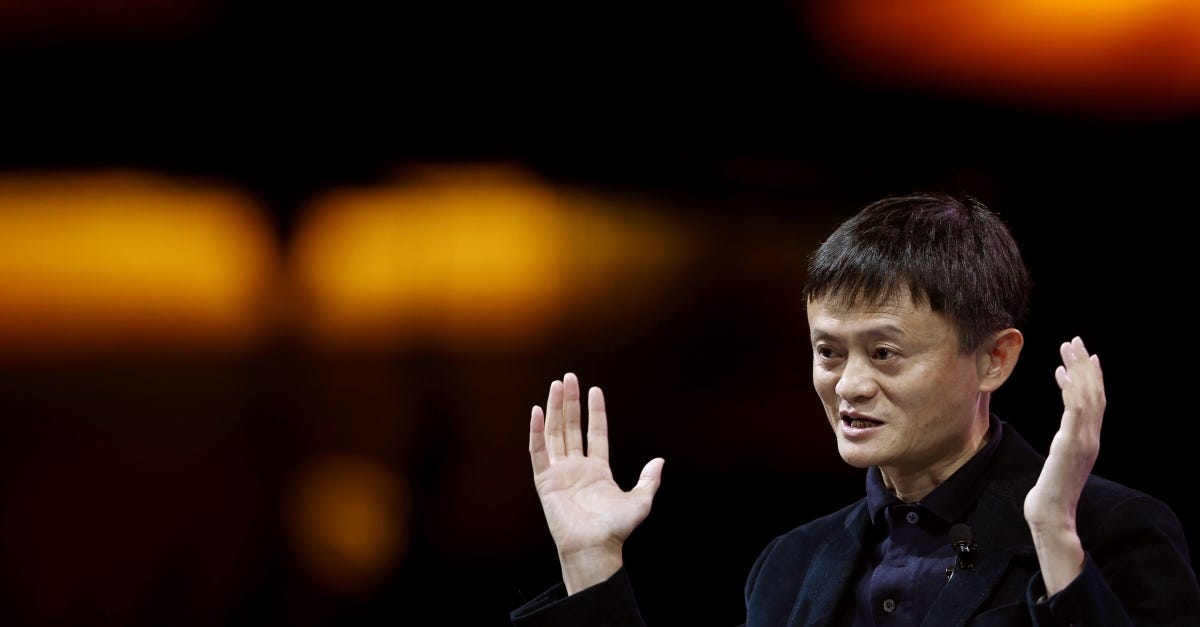
The book: 马云内部讲话 (Jack Ma’s internal dialogues)
今天很残酷,明天更残酷,后天很美好,绝大部分人死在明天晚上,看不到后天的太阳。阿里人必须看到后天的太阳。 — 马云
Today is a cruel day. Tomorrow is even more cruel. The day after tomorrow is beautiful. The vast majority of people will die tomorrow night, and not live to see the sun the day after tomorrow. Alibaba’ers must live to see the sunrise of the day after tomorrow. — Jack Ma (loosely translated)

This book is a collection of Jack Ma’s internal speeches from 2004 to 2009, on a variety of company occasions from all-hands, to anniversary, to management training, and even a company wedding toast. What striked me was the remarkable consistency in his rhetorics.
There are a few themes that were iterated over and over throughout the years. It might sound like brainwashing; at the same time, that’s how a company engraves culture into its DNA. If anything, I realize how tough it is to be a captain. There is no time and space for micro-management, but it is absolutely critical to align the thousands of people to the same direction. It takes confidence, guts, and tons of repetition
Some context first
Prior to founding Alibaba, Jack Ma started China’s first yellow pages on the Internet. Before that, he was an English teacher. He had the first-hand opportunity to see how Internet was being used in the US in the 90s. He also had the ability to communicate fluently in English, a crucial skill as he integrates Western management styles in Alibaba.
It’s also worth pointing out that Ma had a very traditional Chinese upbringing in communist China. He was born in 1964, and like many in that generation, experienced one of the largest cultural changes in his lifetime. He uses many military analogy, not uncommon for his generation. Yet, he embraced change. His leadership philosophy is a blend of Confucius thinking, communist Chinese, and Silicon Valley. It made a genuinely interesting read, and resonated with me.

使命感 — Mission and purpose
Throughout all his speeches, Ma talks about Alibaba being driven by its mission to empower China’s SMBs, to help them sell their products online and to help entrepreneurs succeed. He preaches with every opportunity, and it resonates. Alibaba is not just about making money, although that is a goal and there’s nothing wrong with it, but it’s driven by the mission. I sense that Ma deeply believes that China’s SMBs and economy will inevitably depend on the Internet, and it’s his calling to accomplish this through Alibaba.
It’s a very compelling argument, one that I find very common among founder-CEOs. This deep belief drives the company to success despite the odds.

eCommerce is inevitable
Visionaries are special. They see future trends and deeply believe in them. Similar to how Jeff Bezos dreamed of the everything store in late 90s, Jack Ma also dreamed of a world where eCommerce is as natural as daylight when he started Alibaba in 1999. He had the benefit of knowing how Internet worked in the US and Europe, then taking that to China, but his conviction to the trend is commendable.
VCs favor start-ups that are riding a wave, and for good reason. When the market is trending in an inevitable direction, there is lower risk for failure. Of course, there are tons of challenges, but these are operational challenges rather than directional challenges. You know there will be 1 or 2 companies in the field of X (in 2016, X might be ML, AI, AR/VR). It’s just a question of can my company be that winner. At least the playing field is there.
In Chinese, this is called 大方向 (general direction). Go catch the tailwind.
Being around for 102 years
I don’t know where this came from, but a hallmark of Ma’s motivational speech is the goalpost of being around for 102 years. Given Alibaba was founded in 1999, that means it will touch 3 centuries.
Ma uses this to accentuate how young the company is, and how much growth potential there is in its future. He often likens Alibaba to a child in its teenage years. It has many strengths, and also many deficiencies: unfinished processes, unpolished products, holes as a result of scrappiness.
For a company to truly live 102 years, though, it needs to develop a solid foundation. In corporate lingo, that’s its culture. Culture lives on beyond the current generation of employees, executives, founders; it transcends business unit boundaries. Wielded well, it’s a tool that will carry a legacy.

Customers first. Employees second. Shareholders third.
Talking about culture, this is Alibaba’s operating motto. It’s strikingly similar to Amazon’s. It’s simple and intuitive. It totally makes sense. Capture the hearts of your customers. Attract amazing people to work on your mission. Everything else will take care of themselves.
It is probably easier said than done. I haven’t worked with shareholders yet and can’t tell.

拥抱变化 — Embrace change
“变化永远充满多变性,必须不断对灾难降临的可能性进行预测,即使没有灾难时也要做好准备。东西方哲学的核心思想就是拥抱变化、创造变化。形势好的时候要为形势不好做准备,形势不好的时候,我会调整心态,对自己说:机会来了。”
Change has always crucial to growth, from biology to civilization. What’s changed in recent years is the pace of change, especially with the Internet. If one believes in exponential theory, that pace will only hasten in the coming years.
Ma writes (above) that we must always be ready for change, and embrace it. Prepare for it when things are going well (this reminds me of Google’s blue sky projects), because that will change; someone will come and disrupt you. Also, prepare for it when things are going down the drain; change your mindset, welcome the change as the opportunity it will inevitably bring. Most companies quickly fail when they are disrupted, because changing its core business model is very hard.
Jack Ma is ordinary; Alibaba has an incredible team
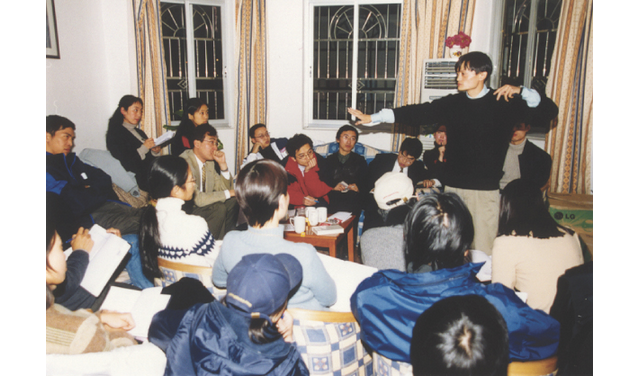
“We are ordinary people working on an extraordinary mission” is another rhetoric of Ma’s. He makes a point of re-iterating that it’s the team that accomplish all of Alibaba’s successes. It’s never Jack Ma. People shouldn’t celebrate Jack Ma as a genius or someone very accomplished; it’s the employees of Alibaba that should be celebrated.
In an ode to “A players hire A+ players,” Ma also emphasizes that there are tons of smarter, harder-working people out there. In fact, the people that joined more recently are probably smarter and more qualified than people that have been around Alibaba for a while. The secret sauce is that teams being able to work well.
Unlike employees at Microsoft or Google, Ma says, we are just ordinary people at Alibaba. He points to people that have left Alibaba, saying there are people who think they are smarter, have more ambition, who left for our competitors or went to pursue entrepreneurship. They haven’t found any extraordinary success.
Rather, it’s those of us who stayed at Alibaba because we had nowhere else to go, and the job was good, the team was good, who suddenly found themselves millionaires just by doing what they do. What makes us special is that Alibaba is riding an inevitable wave.
I still can’t figure out if that’s more of a statement for employee retention, but there’s certain truth in that. A group of loyal, dedicated people working on a mission tends to deliver results.