The Brain Got Hands
I’m in Beijing visiting family. Been explaining to my parents and grandparents why AI feels so different now. The cleanest analogy I could come up with was this.
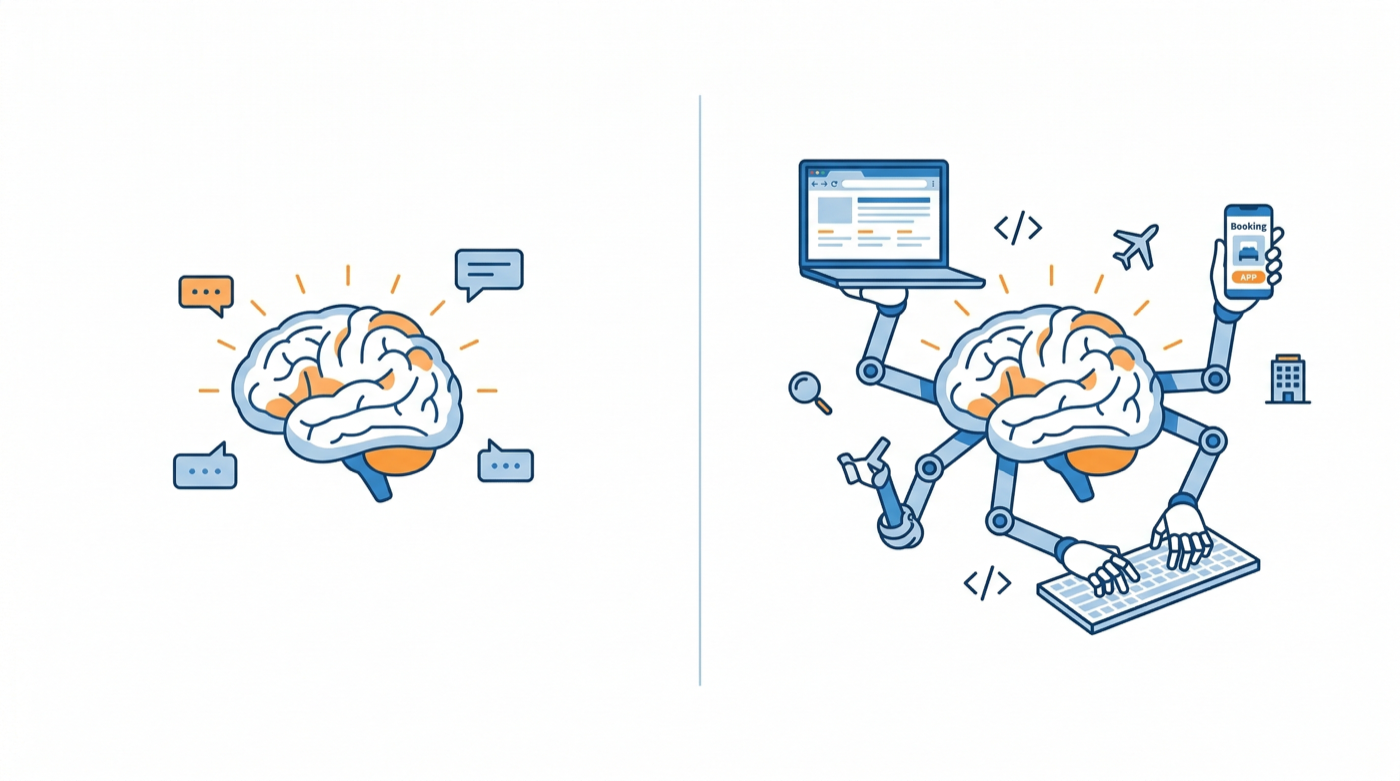
AI is a brain. It’s actually a very, very intelligent brain. But a brain by itself can only sit there and think. It can have a conversation with you, it can wax poetic, but it can’t actually do anything. That’s the chatbot experience. You talk to it, it talks back, cool, whatever.
What changed is tools. Give AI a browser and the ability to write code, and you’ve just handed it the two most general-purpose tools in the digital world. Think about how much of what a knowledge worker does comes down to using a browser and writing and running code. Now AI can do all of that.
And then you add specialized tools. A travel agent without access to Expedia can only tell you that Bali is nice. Give them Expedia and they can find specific flights, compare hotels, and actually book the whole trip for you. Same brain, completely different usefulness.
The models aren’t dramatically smarter than they were six months ago. Of course they keep improving. But the real unlock is tools. That’s what “agentic AI” actually means. Not a smarter brain, but a brain that can participate in the world.
And this only gets more interesting when the same brain gets a body. A humanoid robot can use a hammer, cook with a wok, open a door. All tools built for human hands. Same AI, same intelligence, just now it can touch the physical world too.
Really exciting and really scary at the same time.